


2025 Tucson vs 2025 CR-V in Lebanon, TN
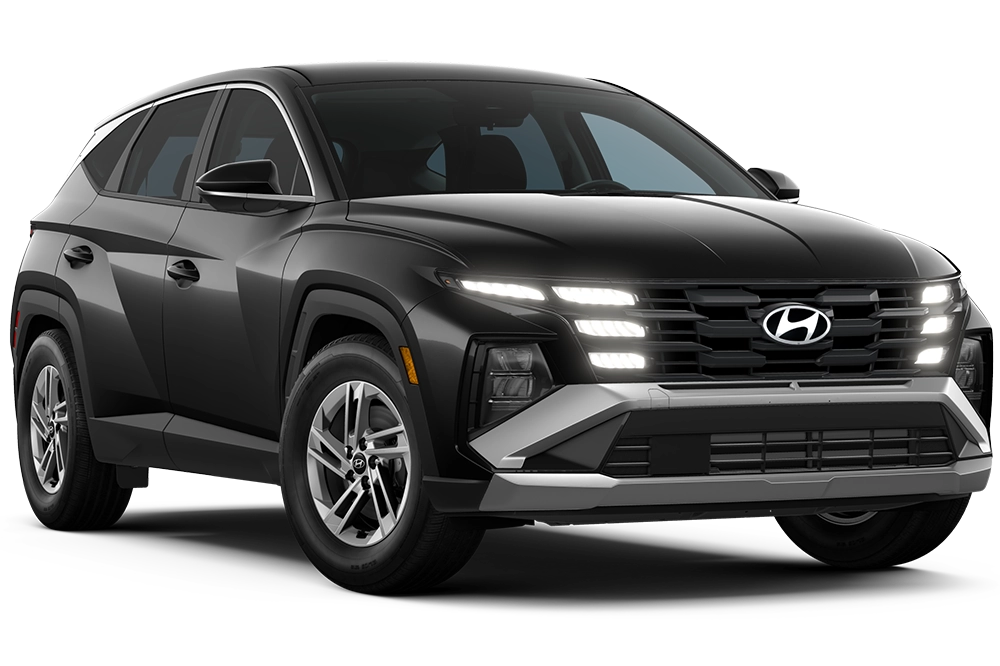
2025 Hyundai Tucson vs 2025 Honda CR-V
Compact SUVs appeal to different buyers because of their versatility and easy-to-drive size. The 2025 Hyundai Tucson and the 2025 Honda CR-V stand out as excellent choices in this segment. The following Hyundai vs Honda comparison examines their interiors, performance, tech, and safety features.
Interior Comparison
The Tucson’s front seats are roomy, while the back seats have ample legroom and are reclinable. It is relatively easy to enter and exit this SUV, thanks to wide door openings. It’s also easy for drivers to get that perfect driving position through the adjustable seats. A large windshield and slim roof pillars enhance visibility.
With 38.7 cubic feet of cargo space behind the rear seats, the Tucson ranks among the top small SUVs for storage options. You can enjoy an impressive 74.8 cubic feet of interior space by folding down the seats.
The CR-V's interior may appear a bit plain compared to the Tucson's cabin. The two-row seating arrangement comfortably accommodates five passengers, but the rear seats provide limited adjustability, making it challenging for some backseat riders to find a comfortable position.
The CR-V can hold more cargo than the Tucson. With all seats up, this Honda SUV offers an impressive 39.3 cubic feet of cargo space, one of the largest in its segment. When the seats are folded down, the space is increased to 76.5 cubic feet, making the CR-V ideal for those who frequently haul large items.
|
2025 Hyundai Tucson |
2025 Honda CR-V |
|
|
Power and Performance
The Tucson offers a comfortable and smooth driving experience. The steering is responsive, and the optional all-wheel drive provides excellent traction on the road. Powering this Hyundai is a 187-hp 2.5-liter 4-cylinder engine matched with an eight-speed automatic transmission. This powertrain is sufficient for daily driving requirements. When outfitted with the proper equipment, this vehicle can tow up to 2,000 pounds.
The CR-V is driven by a turbocharged 1.5-liter 4-cylinder engine that produces 190 horsepower and 179 lb-ft of torque. This engine is mated to a continuously variable automatic transmission (CVT). Front-wheel drive is a standard feature, and all-wheel drive is available. This powertrain works well for everyday driving and merging onto highways. This Honda SUV also has a towing capacity of up to 1,500 pounds.
|
2025 Hyundai Tucson |
2025 Honda CR-V |
|
|
Tech and Entertainment
The Tucson's 2025 infotainment system updates are a major improvement over the last iteration. The base touchscreen has been made larger, and Hyundai swapped out the touch-sensitive climate control panel for buttons.
The CR-V's infotainment system is user-friendly, featuring an intuitive interface, clear graphics, and a responsive touchscreen. Physical knobs and buttons make it easy to navigate the menus and adjust essential functions like climate settings and volume.
|
2025 Hyundai Tucson Technology Features |
2025 Honda CR-V Technology Features |
|
Infotainment screen options: 12.3-inch Touchscreen Audio system options: Six-Speaker Stereo (SE, SEL, SEL Convenience, XRT, and Limited Trims), Eight-Speaker Bose Audio System (Limited and XRT Trims)
|
Infotainment screen options: 7-inch Touchscreen Audio system options: Four-Speaker Stereo System (LX Trim), Six-Speaker Stereo System (EX Trim), Eight-Speaker Stereo System (EX-L Trim)
|
Safety Features
The Tucson is a Top Safety Pick from the Insurance Institute for Highway Safety (IIHS). It has also been awarded a five-star overall rating by the National Highway Traffic Safety Administration (NHTSA). This Hyundai SUV offers an outstanding set of standard safety features. These include forward collision warning with automatic emergency braking and pedestrian and cyclist detection.
Similarly, the CR-V has also earned the Top Safety Pick designation from the IIHS and a commendable five-star overall rating from the NHTSA. When it comes to safety features, it offers many as standard, including adaptive cruise control and lane-keep assist.
|
2025 Hyundai Tucson Standard Safety Features |
2025 Honda CR-V Standard Safety Features |
|
|
Wilson County Hyundai’s Bottom Line
This 2025 Hyundai Tucson vs 2025 Honda CR-V shows that both are excellent compact SUVs. However, each focuses on slightly different priorities. The Tucson is ideal for buyers who value interior comfort, user-friendly tech, and a smooth everyday driving experience. On the other hand, the CR-V is a great fit for those who prioritize cargo space and a more spirited, nimble driving feel. However, the Tucson is the more well-rounded option between the two.
Are you interested in the 2025 Hyundai Tucson? Why don’t you take it for a test drive? If you’re in Lebanon, TN, swing by Wilson County Hyundai today. We can’t wait to welcome you to our dealership.
*Bluetooth® word marks and logos are registered trademarks owned by Bluetooth SIG, Inc., and any use of such marks by Hyundai is under license. A compatible Bluetooth®-enabled phone must first be paired. Phone performance depends on software, coverage, and carrier.
Disclaimer: This content was drafted with AI assistance for initial drafting, reviewed by a subject-matter expert for accuracy, and edited by our team of writers and editors.
Wilson County Hyundai
Address
1310 W Main Street
Lebanon, TN 37087
Phone
- Sales 877-358-5173
- Service 877-463-3981
- Parts 877-826-2082
| Monday | 8:00AM - 7:00PM |
| Tuesday | 8:00AM - 7:00PM |
| Wednesday | 8:00AM - 7:00PM |
| Thursday | 8:00AM - 7:00PM |
| Friday | 8:00AM - 7:00PM |
| Saturday | 8:00AM - 7:00PM |
| Sunday | Closed |
| Monday | 7:30AM - 6:00PM |
| Tuesday | 7:30AM - 6:00PM |
| Wednesday | 7:30AM - 6:00PM |
| Thursday | 7:30AM - 6:00PM |
| Friday | 7:30AM - 6:00PM |
| Saturday | 8:00AM - 3:00PM |
| Sunday | Closed |
| Monday | 7:30AM - 6:00PM |
| Tuesday | 7:30AM - 6:00PM |
| Wednesday | 7:30AM - 6:00PM |
| Thursday | 7:30AM - 6:00PM |
| Friday | 7:30AM - 6:00PM |
| Saturday | 8:00AM - 3:00PM |
| Sunday | Closed |